
1. How do you define power in contemporary international
relations, and why is “soft power” more crucial today than
ever before?
In contemporary international relations, power has become a
relative and multidimensional concept that can no longer be
explained solely through military or economic dominance.
Thanks to the framework introduced by the American political
scientist Joseph Nye, we now speak of hard power, soft power,
and the more recent concept of smart power.
In a world where the boundaries of influence are increasingly
blurred and leadership is often symbolic rather than
substantive, soft power, the ability to attract through culture,
values, and policy has become a key instrument. My scholarly
interest in soft power also stems from a personal conviction that
lasting stability in international relations cannot be built on
force alone, but rather on mutual respect, understanding, and
goodwill among nations.
2. How do you educate students at Webster University to
recognize the difference between manipulation and
constructive social influence?
I teach my students in the way I would have wished to be taught
myself: through clarity, consistency, and personal
responsibility for one’s words. I follow Webster University’s
official curriculum while also bringing my own pedagogical
approach into the classroom, particularly when discussing
power, influence, and the role of media in politics 
Students often ask how one can recognize authentic social
influence. The answer is never simple, as it involves an
interplay of interests, context, and timing. This is precisely why
I emphasize the development of critical thinking, social
wisdom, and a certain intellectual instinct, abilities that are
equally essential in everyday life and in political reality.
3. How challenging is it to teach political science in the
United States during a period of pronounced global
polarization?
Although I currently teach online from the United States to
international students from different parts of the world, global
polarization represents not an obstacle but a pedagogical
challenge. Interestingly, it is precisely in times of deep division
that international relations becomes one of the most relevant
and sought-after academic fields.
My goal is to provide students with knowledge that is
responsive to the specific time and context in which we live, yet
also enduring in value—knowledge that fosters understanding
rather than deepening conflict.
4. Your journey leads from your hometown of Čajniče to
the academic space of the United States. How has that path
shaped your understanding of politics?
Čajniče is a small town in Bosnia and Herzegovina, yet one
exceptionally rich in cultural, religious, and identity diversity.
In that sense, it was my first space of international encounters
Each semester, including the Spring 2026 semester that has just
begun, I start my course by discussing the importance of the
geopolitical environment in which states and individuals
emerge and develop. Growing up in the Balkans—a region
marked by complex history and strong identities—has given
me a unique perspective for understanding international
relations.
I grew up surrounded by diversity that was completely natural
to my family. That is why today I can easily understand other
peoples and deeply respect their cultures, traditions, and values.
5. What are the key differences between Balkan and
American approaches to educating future political
scientists?
In the Balkans, although to a lesser extent than in the past,
traces of older educational systems are still present, including
formalism and the influence of informal interests. As a
representative of a younger generation of professors, I cannot
personally testify to that historical period, but I can observe that
its structural remnants remain and that deeper modernization is
still needed.
The American educational system, by contrast, is characterized
by a clear integration of theory and practice, as well as a strong
emphasis on analytical thinking and applied knowledge. The
focus is not merely on acquiring information, but on critically
interpreting and using it in real political and diplomatic
contexts—this is the key distinction from the Balkan approach
6. How do you deal with nostalgia, and how do you maintain
a connection with your place of origin?
Beyond a quiet and natural longing for moments with family
and close friends, who are mostly in Belgrade and elsewhere in
Europe, I would not say that I experience nostalgia. I believe
that we are always where we need to be, in accordance with
who we are at a given moment.
My connection to my place of origin lives through my scholarly
work, the themes I explore, and the way I understand the world.
7. How do you integrate psychological knowledge into the
analysis of political processes and your work with young
people?
The psychological knowledge I acquired during my education
is invaluable today. It allows me to see students as individuals
rather than merely as part of a group.
Although I work with a large number of students each semester:
between 75 and 125, I strive to recognize their different
personalities: future leaders, analysts, observers, or critics.
Psychology helps me understand them first as young people,
and then gradually guide them into the complex realities of
political and diplomatic life.
8. Is there a correlation between political stability and the
role models play a crucial role in shaping stable personalities,
and thus stable states.
Emotionally and socially healthy environments create
responsible citizens, which is the foundation of long-term
political stability.
9. As someone engaged in dance and occasionally fashion,
how does this help you maintain balance in relation to the
strict academic and political world?
At the moment, I am on a pause from dance and from any
involvement in the fashion world due to numerous academic
commitments. However, I believe I will return to them in time.
Hobbies represent a healthy balance in life and should be
nurtured as such, a point I often emphasize to my students as
well.
10. How do you view encounters with different cultures?
Encounters with different cultures enrich me deeply. Working
in international relations requires genuine curiosity and respect
for other peoples. I consider myself privileged to have chosen a
profession that reminds me of this value every day.
11. Can “dance diplomacy,” or art more broadly, serve as a
tool for reconciliation in conflict-ridden societies?
Absolutely. At leading institutions that educate future
diplomats, courses in art, ethics, and protocol hold an important
place. Dance is a universal language of encounter. Argentine
tango, both in Europe and in Chicago, has connected me with
people of many nationalities and cultures, through whom I have
learned to understand the world more deeply.
12. What key skills must a young political scientist possess
in 2026 to remain relevant on the global market?
Above all, human values, moral integrity, and emotional
intelligence. Next comes respect for other peoples and cultures,
rooted in intellectual openness, and than theoretical knowledge
and practical experience.
As Henry Kissinger once noted, a political scientist must
understand history and philosophy. I would add psychology as
well, particularly the psychology of nations — because national
character does not fundamentally change over centuries. Only
on that foundation can serious political and diplomatic
expertise be built.
13. What do you see as the greatest challenge for “gentle” or
soft diplomacy in a world that is rapidly rearming once
again?
The greatest challenge for soft diplomacy today is a profound
misunderstanding of its true essence. It is often mistakenly
perceived as a form of hidden manipulation or superficial
charm. In reality, it is grounded in a far deeper principle: mutual
love and respect among individuals, communities, and nations.
Love has always been and remains — the greatest force and the
most powerful form of influence. From it respect arises, as well
as understanding, and the ability to see the other not as an
adversary, but as an equal interlocutor. This is precisely why it
has the strength to transcend historical burdens and
contemporary conflicts that continue to shape international
reality.
Soft diplomacy does not seek victory over others, but the
creation of space in which all actors can act for the benefit of
shared peace and stability. In other words, in front of the power
of love and sincere understanding, even the most hardened state
leaders become benevolent, not defeated, but benevolent. And
in that lies the essence of lasting prosperity in international
relations and in today’s world.
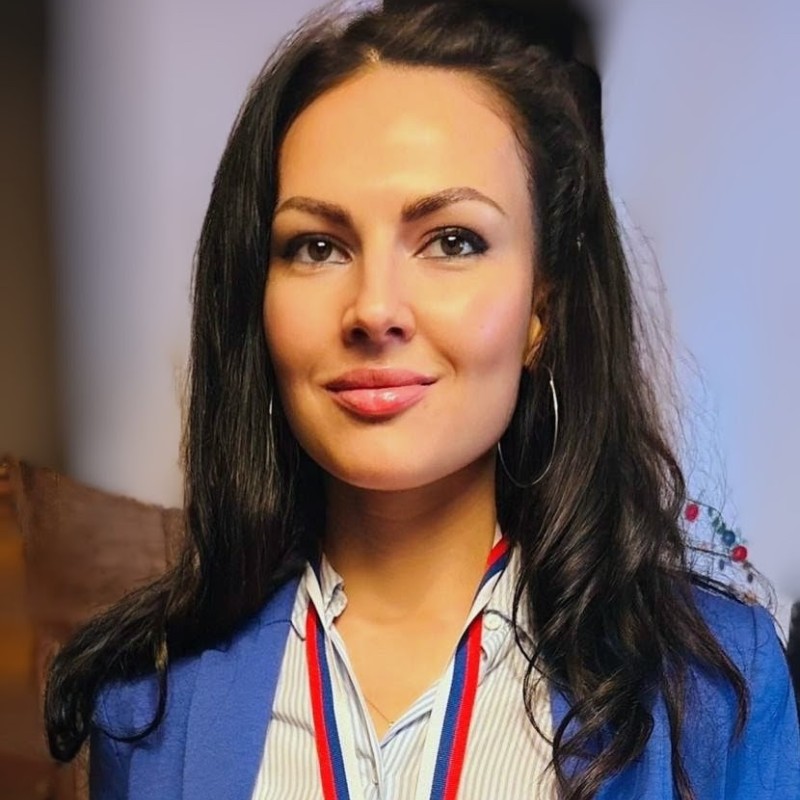
Introductory Note (in place of a short biography)
Ljupka Katana is a political scientist and professor of
international relations with extensive academic experience
across Europe, Central Asia, and the United States. She earned
her PhD at the Faculty of Political Sciences, University of
Belgrade, and her scholarly work focuses on international
relations theory, soft power, diplomacy, and the intersection of
politics, history, and values in global processes. As a faculty
member at Webster University, she teaches international
students and she is recognized for her ability to explain
complex political phenomena through real-world examples,
ethical reflection, as well as a deep understanding of cultural
differences. Her academic and professional path reflects that of
a contemporary global scholar whose knowledge, work ethic,
and values naturally belong within the American academic
space
